1
Layered backend architecture
The backend separates routers, services, schemas, models, and dependencies, keeping HTTP handling, business logic, validation, and database access modular and easy to maintain.
Loading page...
An AI-powered Vehicle License Plate Recognition System. It provides secure authentication, vehicle management, OCR processing, and license plate detection.
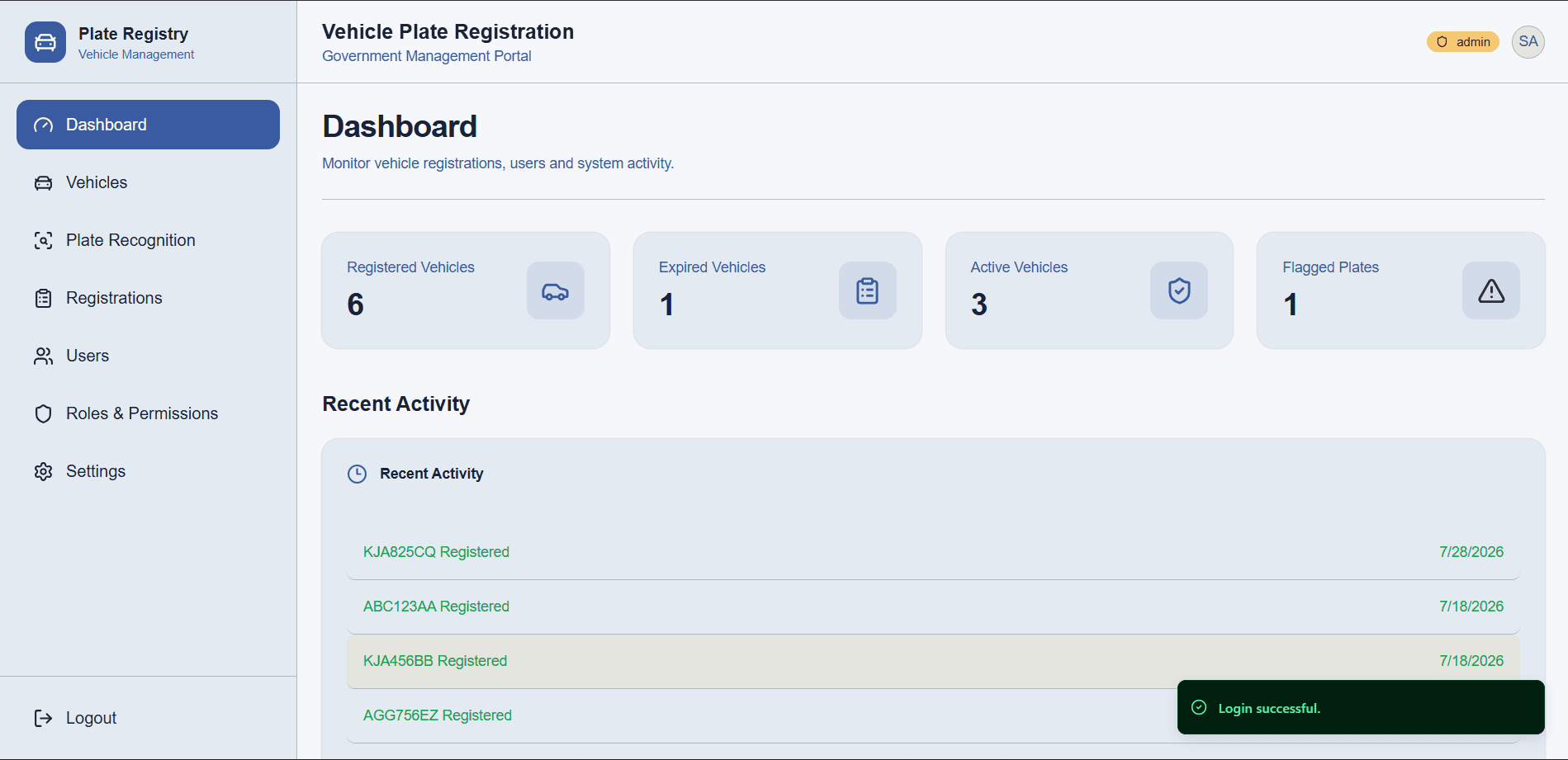
Project overview
An AI-powered web application designed to automate vehicle registration, license plate recognition, and verification. The system enables authorized personnel to register vehicles, detect and recognize license plates from uploaded images or camera input, and instantly verify them against a secure database. It combines modern computer vision techniques with a responsive web interface to streamline vehicle identification while protecting sensitive owner information through role-based access control. Built with a modular architecture, the application is designed for scalability, maintainability, and future enhancements such as real-time camera streams, audit logging, and advanced reporting.
Core functionality
JWT-based authentication with role-based access control for Admin and Officer users
Vehicle registration and management with CRUD operations, search, filtering, sorting, and pagination
AI-powered license plate recognition using YOLO, OpenCV, and EasyOCR
Automatic vehicle verification against registered records after recognition
Role-aware privacy filtering for sensitive owner information during verification
Responsive dashboard with vehicle management, recognition, and verification workflows
OCR candidate selection with manual plate correction and re-verification
Dashboard analytics with vehicle statistics and recent registration insights
Engineering approach
The backend separates routers, services, schemas, models, and dependencies, keeping HTTP handling, business logic, validation, and database access modular and easy to maintain.
License plate recognition and vehicle verification are implemented as separate services, allowing OCR results to be corrected, re-verified, and reused without rerunning the entire recognition process.
All frontend API communication is centralized through a reusable client that manages authentication headers, request timeouts, error handling, and consistent request behavior across the application.
YOLO detection, image preprocessing, and OCR are encapsulated in dedicated singleton services to avoid repeated model loading, improve performance, and simplify future enhancements to the recognition pipeline.